Prostate Artery Embolisation in Newcastle
Prostate artery embolisation, often shortened to PAE, is a minimally invasive treatment for urinary symptoms caused by an enlarged prostate. It works by reducing the blood supply to the prostate, which can help the gland shrink and reduce pressure on the urine channel.
Tyneside Urology Partners provides prostate artery embolisation consultations in Newcastle for selected men with enlarged prostate symptoms who want to discuss an option that does not involve surgery through the urethra. Treatment suitability depends on your symptoms, prostate size, bladder function, general health, scan results and a specialist consultation.

What is prostate artery embolisation?
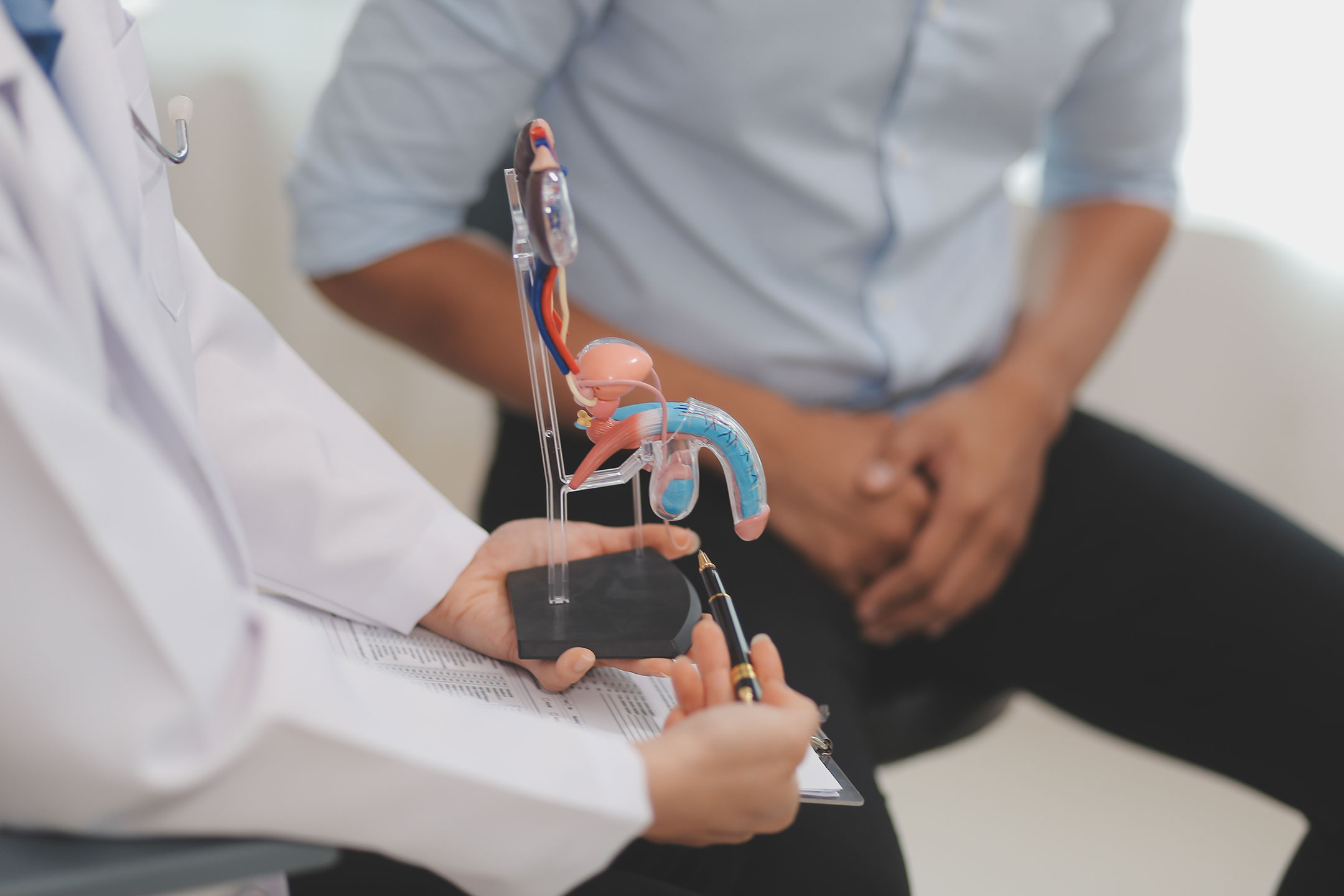
Prostate artery embolisation is a minimally invasive treatment for benign prostate enlargement. The prostate sits below the bladder and surrounds the urethra, which is the tube that carries urine out of the body.
When the prostate becomes enlarged, it can press on the urethra and narrow the channel that urine passes through. This can cause symptoms such as weak flow, hesitancy, straining, urgency, frequency or waking at night to pass urine.
PAE treats the prostate by reducing its blood supply. A very small catheter is guided through an artery, often from the wrist or groin, towards the blood vessels supplying the prostate. Tiny particles are then released to block selected vessels. Over time, reduced blood flow can cause the prostate to shrink.
The procedure is carried out by an interventional radiology team using image guidance. It does not involve cutting, removing or operating on prostate tissue through the urethra. Your urologist will explain whether PAE may be suitable and how care is coordinated with the radiology team.

Why prostate artery embolisation may be considered
PAE may be considered for men with enlarged prostate symptoms who want to discuss a minimally invasive option that avoids surgery through the urethra. This can be particularly relevant for men who are not well suited to conventional prostate surgery because of general health, prostate size or personal preference.
Because PAE works through the blood vessels rather than the urethra, it may appeal to men who wish to avoid instruments being passed into the prostate channel during surgery. It is still a procedure, however, and it needs careful assessment before a decision is made.
The purpose of assessment is to check whether your symptoms are likely to be caused by prostate enlargement and whether your prostate blood supply and anatomy are suitable for PAE. Some men may be better suited to medication, UroLift, Aquablation, HoLEP, TURP or another prostate treatment.

Who prostate artery embolisation is for
Prostate artery embolisation may be suitable for selected men with urinary symptoms caused by benign prostate enlargement. Specialist assessment may be helpful if you:
- Have bothersome symptoms from an enlarged prostate
- Have a weak or slow urine flow
- Have difficulty starting urination
- Need to strain to pass urine
- Feel that your bladder does not empty fully
- Wake at night to pass urine
- Wish to avoid conventional surgery through the urethra
- Have a prostate size that may make some other procedures less suitable
- Have health factors that make surgery or anaesthetic more complex
- Want to understand how PAE compares with other prostate treatments
PAE is not suitable for everyone. Your clinician will discuss your symptoms, examine you where appropriate and explain whether this treatment is a reasonable option for you.
Symptoms prostate artery embolisation may help treat
PAE may be discussed when urinary symptoms are thought to be caused by benign prostate enlargement. These symptoms can overlap with bladder problems, infection or other urological conditions, so careful assessment is important.
A weak or slow stream can happen when the enlarged prostate narrows the urethra. This can make passing urine take longer and may become increasingly frustrating.
Some men find it difficult to start passing urine or need to strain. This can occur when the bladder has to work harder to push urine through a narrowed prostate channel.
A feeling that the bladder has not emptied fully may occur when urine remains in the bladder after passing urine. This can be linked to prostate obstruction, bladder muscle function or both.
An enlarged prostate can contribute to needing to pass urine more often or waking at night to use the toilet. These symptoms can also be linked to bladder overactivity, so assessment helps guide the right treatment.
What to expect
Prostate artery embolisation is carried out by an interventional radiology team. Your urologist will assess whether PAE is appropriate and help coordinate the pathway where this treatment is suitable.
You will begin with a consultation to discuss your urinary symptoms, how long they have been present and how they affect your daily life. Your clinician will ask about urine flow, urgency, night-time urination, infections, previous prostate treatments and any medicines you are taking.
Tests may include urine testing, a flow test, bladder scan to check emptying, prostate assessment and imaging where needed. These help confirm whether symptoms are likely to be caused by benign prostate enlargement and whether PAE may be appropriate.
Your clinician will explain what PAE involves, what it may help with, what the limitations are and what side effects can occur.
If PAE is being considered, imaging is usually needed to assess the prostate and the blood vessels supplying it. This helps the interventional radiology team plan whether the procedure can be performed safely and effectively.
Your care pathway, including where the procedure is carried out and which clinicians are involved, will be confirmed before treatment is agreed.
PAE is performed through a small catheter placed into an artery, commonly at the wrist or groin. The interventional radiologist uses X-ray imaging to guide the catheter towards the arteries that supply the prostate.
Tiny particles are then released into selected blood vessels to reduce blood flow to the prostate. This is intended to cause the prostate to shrink gradually and reduce pressure on the urethra.
PAE does not involve surgery through the urethra. The anaesthetic or sedation plan will be confirmed before treatment.
Recovery varies between patients. Some men have pelvic discomfort, urinary irritation, increased frequency or tiredness for a short period after the procedure. Your clinician will confirm aftercare instructions, medicines, activity advice and follow-up arrangements.
Symptom improvement is usually gradual rather than immediate. This is because the prostate needs time to respond to the reduced blood supply.
Follow-up allows your clinician to review your symptoms, urine flow and recovery. You may need further assessment if symptoms do not improve as expected or if urinary problems return.
Your follow-up plan will be confirmed before or after the procedure, depending on your individual pathway.
Benefits of prostate artery embolisation
PAE may offer a minimally invasive treatment option for selected men with enlarged prostate symptoms.
No urethral surgery
PAE treats the prostate through its blood supply rather than by operating through the urethra. This can be an important consideration for men who want to avoid urethral prostate surgery where possible.
Minimally invasive approach
The procedure is performed through a tiny catheter in an artery, rather than through an external surgical cut to the prostate.
Image-guided treatment
PAE is carried out using imaging to guide the catheter into the prostate blood vessels. This allows the interventional radiology team to target the blood supply carefully.
May be an option when surgery is less suitable
PAE may be considered for selected men whose general health, prostate anatomy or personal priorities make conventional prostate surgery less suitable. Assessment will confirm whether this applies to you.
Risks and side effects
Prostate artery embolisation is minimally invasive, but it can still cause side effects and is not suitable for everyone.
Possible risks and side effects may include:
- Pelvic discomfort or pain
- Temporary urinary frequency or urgency
- Stinging or burning when passing urine
- Blood in the urine or semen
- Urinary tract infection
- Temporary difficulty passing urine
- Need for a catheter in some cases
- Bruising or bleeding at the wrist or groin puncture site
- Symptoms not improving as expected
- Need for further prostate treatment in the future
- Non-target embolisation, where particles affect nearby tissues, although this is uncommon
- Contrast dye or X-ray related considerations
- Procedure or sedation-related risks
You should seek medical advice if you develop a high temperature, worsening pain, heavy bleeding, inability to pass urine, increasing swelling at the puncture site, or feel very unwell after treatment.
Your clinician and the interventional radiology team will explain the potential risks, benefits and limitations before treatment goes ahead.
Prostate artery embolisation and enlarged prostate treatment decisions
PAE is one of several options for urinary symptoms caused by benign prostate enlargement. It may be considered when symptoms are troublesome and assessment suggests that reducing prostate size could help relieve obstruction.
The right treatment depends on several factors, including prostate size, prostate shape, bladder emptying, symptom severity, medication history, general health and personal priorities.
Some men may be better suited to medication, a minimally invasive prostate procedure, laser prostate surgery or another operation. Your clinician will explain the options that are appropriate for your situation and how PAE compares with them.
Private prostate artery embolisation consultation near Newcastle
Tyneside Urology Partners provides private prostate artery embolisation consultations near Newcastle from its clinic in Team Valley, Tyne & Wear. The clinic serves patients from Newcastle, Gateshead, Tyneside and across the North East.
A consultation gives you the opportunity to discuss enlarged prostate symptoms, prostate assessment and treatment options in a specialist setting. If PAE may be suitable, your clinician will explain the next steps and how care is coordinated with the interventional radiology team.

Frequently asked questions
- Who performs prostate artery embolisation?
PAE is performed by an interventional radiologist using image guidance. Your urologist will assess whether it may be suitable and help coordinate care with the radiology team where appropriate.
- How soon will I notice improvement after PAE?
Improvement is usually gradual. Symptoms may improve over the following weeks as the prostate responds to the reduced blood supply. Your clinician will explain what is realistic for your situation.
- Is PAE suitable if I am not fit for surgery?
PAE may be considered for selected men whose general health makes conventional prostate surgery less suitable. Assessment is still needed to check whether PAE is safe and appropriate.
- Does PAE involve a catheter in the bladder?
PAE is performed through a small catheter in an artery, not through the urethra. Some men may still need a temporary bladder catheter depending on their symptoms and recovery, but this will be confirmed by your clinician.
- Are there risks specific to PAE?
Yes. Because PAE treats the blood vessels, risks can include bruising at the puncture site, contrast dye considerations and rare non-target embolisation. Your clinician and the interventional radiology team will explain these risks before treatment.
- Will PAE shrink my prostate enough to help?
PAE aims to reduce the blood supply to the prostate so it gradually shrinks and relieves pressure on the urethra. The degree of improvement varies between individuals, and some men may need further treatment.
Book Your Urology Consultation
Urology consultations are available a Tyneside Urology.
Please view the form below to check availability and make your booking.
If further tests or treatments are recommended, these will be explained fully before you decide how to proceed. Should you need ongoing support, follow-up appointments can be arranged with your consultant.
You can book your appointment below or contact us if you would prefer assistance.
Ask about prostate artery embolisation in Newcastle
If you have urinary symptoms from an enlarged prostate and want to discuss a minimally invasive option that avoids urethral surgery, a specialist consultation can help you understand whether PAE may be suitable.