Prostate Health Check in Newcastle
A prostate health check is a specialist assessment for men who are concerned about prostate symptoms, raised PSA, family history of prostate cancer or changes in urinary function. It can help identify whether further tests, monitoring or treatment may be needed.
Tyneside Urology Partners provides private prostate health checks in Newcastle for patients who want clear, specialist assessment of their prostate health. The most appropriate tests and next steps depend on your symptoms, age, medical history, family history, PSA result and specialist consultation.

What is a prostate health check?
A prostate health check is an appointment focused on assessing the prostate and identifying whether there are signs that need further investigation.
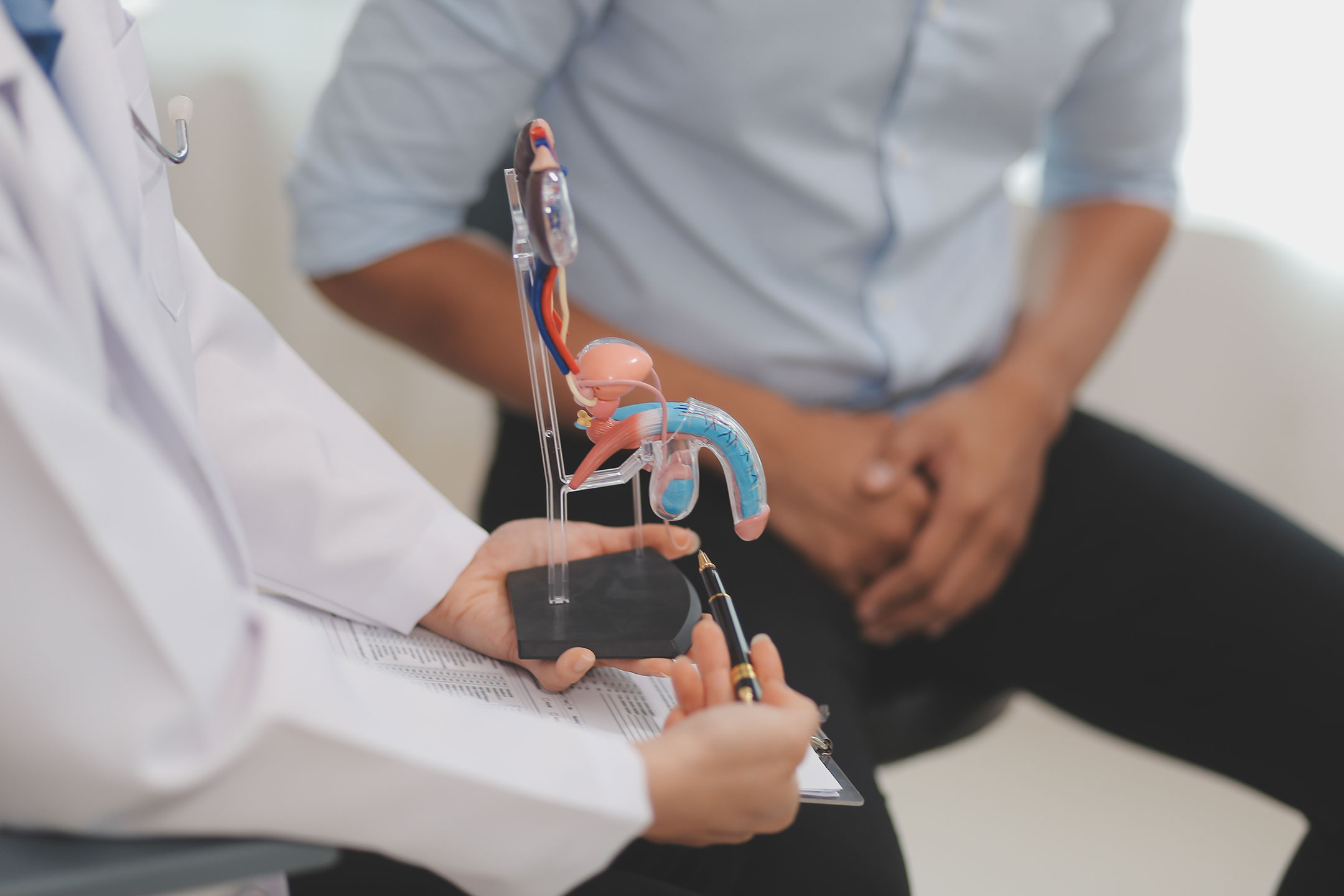
The prostate is a small gland below the bladder. It surrounds the urethra, which is the tube that carries urine out of the body. As men get older, the prostate can enlarge and cause urinary symptoms. In some cases, prostate tests may also be used to assess possible prostate cancer risk.
A prostate health check may include a discussion about symptoms, a review of your medical and family history, a PSA blood test, urine testing and a prostate examination where appropriate. Some patients may also need further tests, such as a prostate MRI scan, urine flow test or transperineal prostate biopsy, depending on the findings.
A prostate health check does not diagnose prostate cancer on its own. It helps your clinician assess risk and decide whether further investigation is needed.

Why a prostate health check may be recommended
A prostate health check may be recommended if you have urinary symptoms, are concerned about prostate cancer risk or have had an abnormal PSA blood test.
Many prostate problems are not cancer. Symptoms such as a weak urine stream, frequent urination or waking at night to pass urine are often linked to benign prostate enlargement. PSA can also rise for reasons other than cancer, including prostate enlargement, inflammation, infection or recent urinary retention.
However, prostate cancer can sometimes cause no symptoms in its early stages. This is why some men choose to discuss prostate health checks, particularly if they have risk factors such as a family history of prostate cancer.
The aim of the appointment is to give you a clearer understanding of your prostate health and whether any further tests or treatment options should be considered.

Who a prostate health check is for
A prostate health check may be suitable for men who want specialist advice about symptoms, PSA results or prostate cancer risk. Specialist assessment may be helpful if you:
- Have a raised PSA blood test
- Have a rising PSA over time
- Have urinary symptoms affecting daily life
- Have a weak or slow urine stream
- Wake at night to pass urine
- Need to pass urine more often than usual
- Feel your bladder does not empty fully
- Have urgency or difficulty holding on
- Have a family history of prostate cancer
- Are concerned about your personal prostate cancer risk
- Have previously had an abnormal prostate examination
- Want to understand whether further prostate tests are needed
- Want to discuss prostate enlargement and treatment options
A prostate health check is not the same as a full diagnostic pathway for every patient. Your clinician will recommend tests based on your individual assessment.
Symptoms a prostate health check can help assess
A prostate health check can help assess urinary symptoms and prostate-related concerns. These symptoms can have several causes, so careful interpretation is important.
A weak or slow urine stream can be linked to benign prostate enlargement, urethral narrowing, bladder weakness or other causes. Assessment may help identify whether the prostate is contributing.
Frequent urination can occur during the day or night. It may be linked to prostate enlargement, bladder overactivity, infection, fluid intake or other urinary conditions.
Some men notice hesitancy, straining or a stop-start urine flow. These symptoms can occur when the bladder outlet is narrowed or when bladder function is affected.
A sensation of incomplete emptying may suggest urine is being left behind after passing urine. A bladder scan or urine flow test may be considered if clinically appropriate.
A raised PSA or family history of prostate cancer can understandably cause concern. A specialist review can help explain what the result may mean and whether further tests are needed.
What to expect
A prostate health check is carried out in a specialist clinical setting. Your clinician will explain which tests are appropriate and how the results may guide the next step.
You will begin with a consultation to discuss your reason for attending. This may include urinary symptoms, PSA results, prostate cancer concerns, family history, previous prostate tests and any current medication.
Your clinician may ask about:
- How often you pass urine
- Whether you wake at night to pass urine
- Whether your flow is weak or interrupted
- Whether you have urgency or leakage
- Whether you have pain, blood in the urine or infections
- Previous PSA results
- Family history of prostate, breast or ovarian cancer
- Previous prostate MRI scans or biopsies
- General health and medication
This helps build a clearer picture before deciding which tests are useful.
A PSA test measures prostate specific antigen in the blood. PSA is produced by the prostate and can be raised for several reasons.
A PSA result is not a diagnosis. It needs to be interpreted alongside your age, prostate size, symptoms, examination findings, infection history and previous PSA results where available.
Your clinician will explain what your PSA result may mean and whether repeat testing, monitoring or further investigation is recommended.
A digital rectal examination may be recommended as part of a prostate health check. This allows the clinician to feel the prostate through the back passage and assess its size, shape and texture.
The examination is usually brief. Some patients find it uncomfortable or embarrassing, but your clinician will explain what is involved and only proceed with your consent.
A urine test may be used to look for signs of infection, blood or other abnormalities. If you have urinary symptoms, your clinician may also consider tests such as a urine flow test or bladder scan to assess how well the bladder empties.
Not every patient needs every test. The assessment is tailored to your symptoms and risk profile.
If your PSA, examination or symptoms need further assessment, your clinician may discuss additional tests. These may include:
- Repeat PSA testing
- Prostate MRI scan
- Transperineal prostate biopsy
- Urine flow testing
- Bladder scan
- Flexible cystoscopy if bladder or urethral symptoms need investigation
Your clinician will explain why any further test is recommended and what it may show.
Benefits of a prostate health check
A prostate health check can provide useful information about urinary symptoms, PSA results and prostate cancer risk.
Clearer understanding of symptoms
Urinary symptoms can be caused by several conditions. A prostate health check can help identify whether symptoms may be linked to benign prostate enlargement, infection, bladder function or another urological issue.
Helps interpret PSA results
PSA can be difficult to interpret without context. A specialist review can help explain whether a result is reassuring, needs monitoring or should be investigated further.
Supports earlier investigation where appropriate
If there are concerning findings, a prostate health check can help guide timely next steps such as prostate MRI or biopsy. This does not mean every patient will need further tests.
Can guide treatment discussions
If symptoms are linked to benign prostate enlargement, your clinician can discuss options such as monitoring, lifestyle advice, medication or procedures including Rezum, UroLift, HoLEP or TURP where appropriate.
Personalised risk assessment
Family history, age, ethnicity, previous PSA results and symptoms can all affect prostate risk assessment. A consultation allows these factors to be considered together.


Risks and side effects
A prostate health check is generally low risk, but some tests have limitations and possible side effects.
Possible risks and limitations may include:
- Mild discomfort or embarrassment during prostate examination
- Bruising or soreness after a blood test
- PSA results causing anxiety or uncertainty
- A raised PSA that is not caused by cancer
- A normal PSA not completely excluding prostate cancer
- Need for repeat PSA testing
- Need for further tests such as MRI or biopsy
- Incidental findings that need further assessment
- Over-investigation or overdiagnosis in some circumstances
- Symptoms being caused by something other than the prostate
Your clinician will explain what each test can and cannot show. The decision to have prostate testing should be based on clear information, discussion and your individual risk factors.
If you have severe symptoms, sudden inability to pass urine, fever, visible blood in the urine or feel very unwell, seek urgent medical advice rather than waiting for a routine appointment.
When to seek urgent medical advice
Some urinary or prostate-related symptoms need urgent assessment and should not wait for a routine private appointment.
Seek urgent medical advice through NHS 111, urgent care or emergency services if you have:
- Inability to pass urine
- Visible blood in the urine
- A high temperature, chills or feeling very unwell
- Severe lower abdominal pain
- Severe back or side pain with urinary symptoms
- New weakness, numbness or difficulty walking
- New loss of bladder or bowel control
- Symptoms that are rapidly getting worse
Do not wait for a private prostate health check if symptoms are severe, sudden or you feel acutely unwell.
Private prostate health check near Newcastle
Tyneside Urology Partners provides private prostate health checks near Newcastle from its clinic in Team Valley, Tyne & Wear. The clinic serves patients from Newcastle, Gateshead, Tyneside and across the North East.
A consultation gives you the opportunity to discuss urinary symptoms, PSA results, prostate cancer concerns and family history in a specialist setting. Your clinician can explain which tests are appropriate and whether further assessment or treatment should be considered.

Frequently asked questions
- What does a prostate health check include?
A prostate health check may include a consultation, symptom review, medical history, family history, PSA blood test, urine test and prostate examination where appropriate. Some patients may need further tests, such as a prostate MRI scan or biopsy, depending on the findings.
- Is a PSA test enough to check for prostate cancer?
A PSA test can provide useful information, but it is not a diagnosis on its own. PSA can be raised for several reasons, and some men with prostate cancer may not have a very high PSA. Your clinician will interpret the result alongside your symptoms, examination and risk factors.
- Should I have a prostate health check if I have no symptoms?
Some men choose to discuss prostate health even without symptoms, especially if they have a family history of prostate cancer or other risk factors. A consultation can help you understand the potential benefits and limitations of testing before deciding what to do.
- Does a raised PSA mean I have prostate cancer?
No. A raised PSA does not always mean prostate cancer. It can also be linked to benign prostate enlargement, inflammation, infection, recent urinary retention or other factors. Further assessment may be needed to understand the likely cause.
- Will I need a prostate MRI scan?
Not everyone needs a prostate MRI scan. It may be recommended if your PSA, examination or risk assessment suggests further investigation is needed. Your clinician will explain why MRI is being considered and how it may guide the next step.
- Can a prostate health check help with urinary symptoms?
Yes. A prostate health check can help assess symptoms such as weak flow, urgency, frequency, night-time urination and incomplete emptying. These symptoms may be linked to benign prostate enlargement, bladder problems, infection or other urological conditions.
Book Your Urology Consultation
Urology consultations are available a Tyneside Urology.
Please view the form below to check availability and make your booking.
If further tests or treatments are recommended, these will be explained fully before you decide how to proceed. Should you need ongoing support, follow-up appointments can be arranged with your consultant.
You can book your appointment below or contact us if you would prefer assistance.
Get clear prostate advice in Newcastle
If you are concerned about urinary symptoms, raised PSA, family history or prostate cancer risk, a prostate health check can help you understand your next steps.