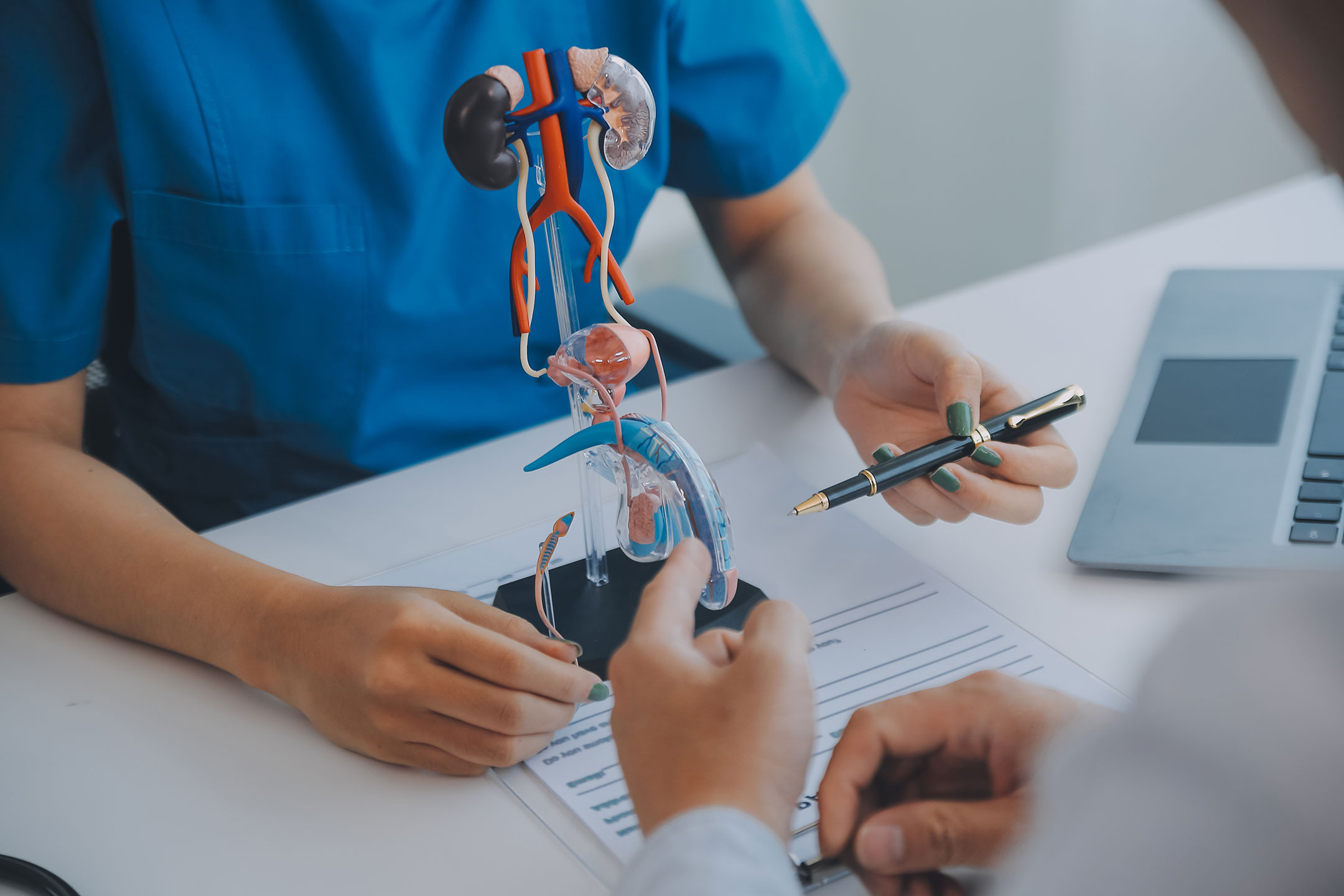
Rezum is a minimally invasive treatment for urinary symptoms caused by an enlarged prostate. It uses controlled water vapour, or steam, to treat prostate tissue that is narrowing the urine channel.
An enlarged prostate, also called benign prostatic hyperplasia or BPH, can lead to a weak flow, difficulty starting to pass urine, frequent trips to the toilet and waking at night to urinate. Rezum is designed to reduce the obstructing tissue over time, without removing part of the prostate.
What is Rezum water vapour therapy?
Rezum is a treatment for urinary symptoms linked to benign enlarged prostate. It uses steam to deliver thermal energy directly into areas of prostate tissue that are contributing to blockage.
The steam causes treated prostate cells to break down. Over the following weeks and months, the body gradually absorbs this tissue. As the prostate reduces in volume, the urine channel may open more fully.
Rezum does not involve removing prostate tissue during the procedure. This differs from other surgical treatments where tissue is removed to improve urine flow.
It is important to remember that urinary symptoms can have more than one cause. Assessment helps establish whether prostate enlargement is contributing to your symptoms and whether Rezum may be an appropriate option.
How does Rezum work?
The Rezum procedure is carried out through the urethra, so there is no external cut. A small telescope-like instrument is passed into the urine channel and used to deliver short injections of water vapour into the prostate.
The number and position of injections depend on the size and shape of the prostate. In selected cases, Rezum may also be used to treat prostate tissue that can grow into the bladder area and contribute to blockage; often called a middle lobe.
The treatment itself is relatively short. It is usually performed as a day-case procedure, with the type of anaesthetic or sedation decided as part of the treatment plan.
Unlike surgery, the benefit is not immediate. The treated tissue takes time to shrink, so urinary symptoms may remain unchanged or temporarily feel worse during the early stages of recovery.
Who is Rezum suitable for?
Rezum is discussed with some men whose urinary symptoms are caused by BPH and are affecting daily life, sleep or confidence.
It may be considered when lifestyle changes or medication have not helped, medication is causing unwanted side effects or someone would prefer to explore a procedure rather than taking long-term medication.
Factors considered during an assessment include:
- Your urinary symptoms and how much they affect you
- Prostate size and shape
- Whether a middle lobe is present
- Your urine flow and bladder emptying
- Your general health and medicines
- Any previous prostate treatment
- Your priorities around recovery and sexual function
Rezum is not suitable for everyone. A different treatment may be more appropriate if there are concerns about bladder function, prostate size, infection or another cause of urinary symptoms.
A specialist assessment may include a symptom questionnaire, urine test, flow test, bladder scan, PSA blood test where appropriate and other investigations if needed. Your clinician can then explain the treatment options that are most suitable for you.
Is Rezum painful?
Anaesthetic arrangements are planned individually. Rezum may be performed with local anaesthetic and sedation, or using another anaesthetic approach where appropriate.
You may experience some discomfort during recovery, particularly when passing urine. This can include urgency, frequency or discomfort. Your treating team will explain what to expect and provide individual aftercare advice.
Pain that is severe, worsening or accompanied by fever, heavy bleeding or an inability to pass urine needs prompt medical advice.
Rezum recovery time and what to expect
Rezum recovery varies from person to person. A key difference between Rezum and tissue-removing surgery is that improvements build gradually as the treated prostate tissue shrinks.
Many patients need a temporary urinary catheter after the procedure. This is a thin tube used to drain urine from the bladder while swelling settles and the treated tissue begins to break down. The length of time a catheter is needed varies, but it is often in place for several days.
Short-term Rezum side effects include:
- Burning or stinging when passing urine
- Needing to pass urine more often
- Urgency
- Pelvic discomfort
- Blood in the urine
- Difficulty passing urine after catheter removal
- Urinary tract infection
- Temporary urinary retention
These symptoms are often temporary, but it is important to follow your aftercare instructions.
A simple Rezum recovery timeline
In the first few days a catheter may be in place. You may notice blood in the urine, bladder irritation or discomfort. Rest and follow the guidance provided by your treating team.
In the first one to two weeks urinary urgency, frequency and burning may continue. Some people find their symptoms temporarily feel worse before they improve.
In the following weeks the body continues to absorb the treated tissue. Urine flow and emptying may begin to improve, although progress is gradual.
Over the next few months the full benefit can take time to develop. Prostate tissue is expected to shrink over around three to six months following Rezum treatment.
Contact your treating team or seek urgent medical advice if you cannot pass urine, have severe lower abdominal pain, develop a high temperature, feel very unwell or have heavy bleeding. If you cannot pass urine and are in significant pain, attend A&E. Call 999 in an emergency or contact NHS 111 for urgent non-emergency advice.
How long until Rezum starts working?
Rezum does not usually provide the immediate change in urine flow that may follow tissue-removing surgery. This is because the prostate tissue needs time to shrink after treatment.
Some people begin to notice improvement within several weeks. For others, it can take a few months for symptoms and urine flow to settle. Bladder symptoms such as urgency, frequency and waking at night may take longer to improve than the strength of the urine stream.
The degree of improvement depends on several factors, including the nature of your symptoms, prostate anatomy, bladder function and any other urinary conditions.
Does Rezum preserve sexual function?
Preserving sexual function can be an important consideration when choosing an enlarged prostate treatment.
Rezum is designed to treat prostate tissue from within the urine channel, without removing tissue close to the structures involved in erections and ejaculation. Erectile function is usually preserved and the risk of retrograde ejaculation is low.
This does not mean there is no risk of sexual side effects. Individual risk depends on factors including your health, existing sexual function and prostate anatomy. Mention any priorities around erections or ejaculation during your assessment.
Rezum results and how long they last
Rezum can improve urinary symptoms, urine flow and quality of life for selected patients. Results vary and no procedure can guarantee a particular outcome.
Clinical evidence reviewed by NICE found that Rezum improved lower urinary tract symptoms associated with BPH, with benefits maintained for up to four years in the main study. Other studies and longer-term follow-up provide useful information, but outcomes may differ between individuals.
It is also important to understand that further treatment may be needed for some patients in the future. This could involve medication, another minimally invasive procedure or surgery, depending on the reason symptoms persist or return.
When considering Rezum, it can help to discuss:
- The level of symptom improvement you hope to achieve
- Whether gradual improvement is acceptable
- The possibility of needing a temporary catheter
- The importance of preserving sexual function
- The potential need for further treatment later
Your clinician should explain the potential benefits, limitations, risks and alternatives before any treatment is agreed.
Rezum vs UroLift and surgery
Rezum, UroLift and surgical procedures such as TURP treat enlarged prostate symptoms in different ways. There is no single best treatment for everyone.
Rezum vs UroLift
Rezum uses steam to treat prostate tissue, which then shrinks gradually. UroLift uses small implants to hold prostate tissue away from the urethra without removing or destroying it. UroLift may create a more immediate opening, while Rezum results develop over time.
Both are options for selected patients who want an alternative to daily medication or more extensive surgery. Suitability depends on prostate size and shape, whether a middle lobe is present, bladder function and your treatment priorities.
Rezum vs TURP
TURP removes prostate tissue through the urethra to improve the urine channel. It is an established surgical treatment that can offer a greater or more immediate improvement in flow for some patients.
Rezum is less invasive and does not remove tissue during the procedure. It may suit men who want to avoid daily medication and place importance on preserving ejaculation. The trade-off is that results build gradually and further treatment may be needed in future.
For a broader guide to BPH, see enlarged prostate symptoms and treatment.
Considering Rezum for enlarged prostate symptoms
Rezum is a suitable option for selected men with urinary symptoms caused by an enlarged prostate. It offers a less invasive approach than surgery, but requires realistic expectations about temporary catheter use, recovery and the time needed for results to develop.
The most suitable treatment depends on your symptoms, test results, prostate anatomy, medical history and what matters most to you.
Rezum water vapour therapy FAQs
- Who is a good candidate for Rezum?
Rezum can be suitable for some men with troublesome urinary symptoms caused by BPH. A specialist will consider prostate size and shape, bladder emptying, overall health, previous treatment and personal priorities before advising on suitable options.
- How long does Rezum recovery take?
Short-term urinary side effects may settle over days or weeks, but the full improvement in symptoms can take several months. A temporary catheter is commonly needed for a few days after treatment.
- Is a catheter always needed after Rezum?
A temporary catheter is commonly used after Rezum to allow the bladder to drain while swelling settles. The exact plan depends on the procedure and your individual circumstances.
- Does Rezum affect ejaculation?
The risk of ejaculation problems after Rezum is generally low compared with some tissue-removing prostate operations. However, side effects remain possible and should be discussed before treatment.
- Is Rezum better than UroLift?
Neither is automatically better for everyone. Rezum treats tissue with steam and results develop gradually, while UroLift uses implants to open the urine channel. The most appropriate option depends on prostate anatomy, symptoms, treatment goals and specialist assessment.
Book a consultation
To find out whether Rezum may be suitable for your enlarged prostate symptoms, book a consultation with Tyneside Urology Partners in Team Valley.