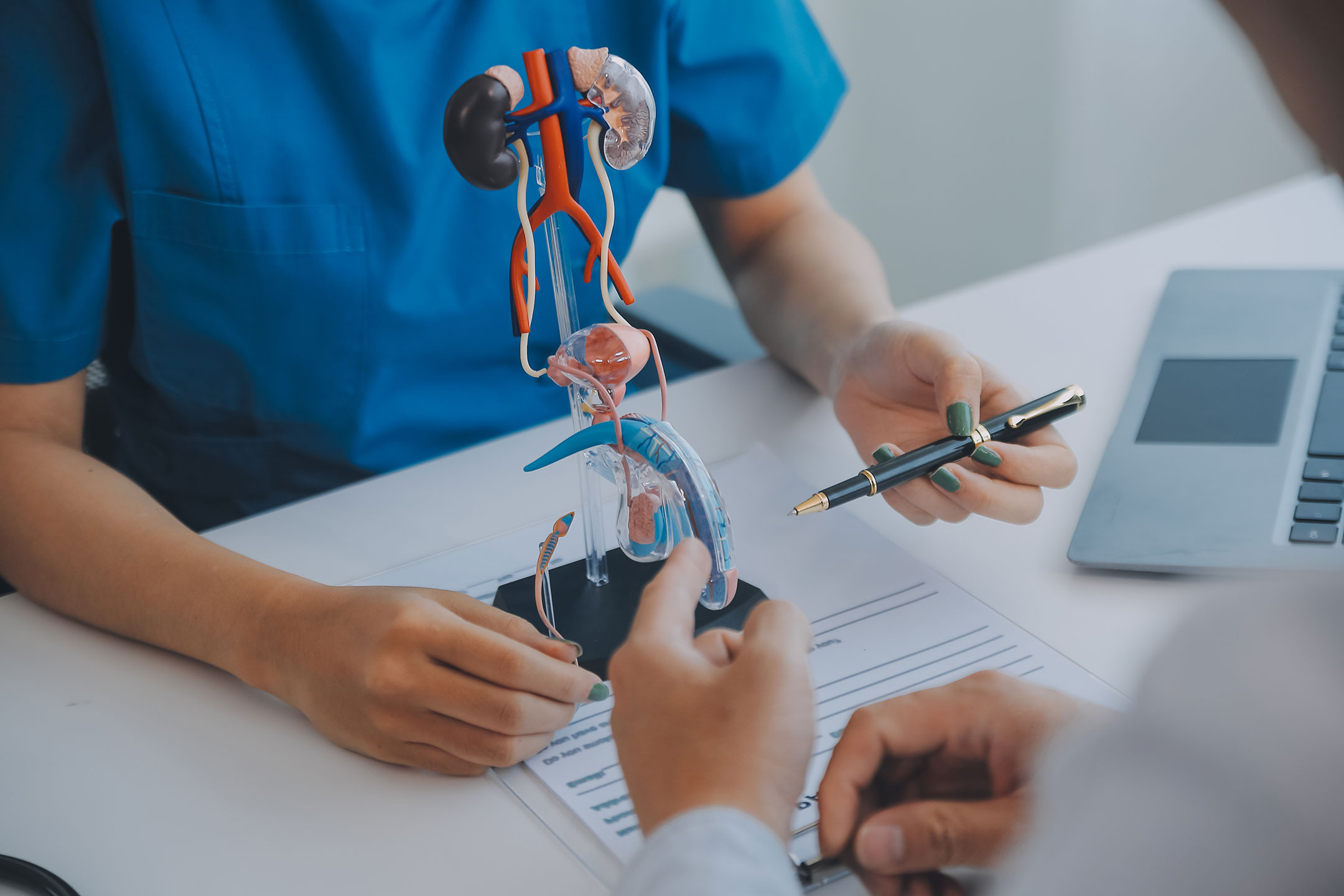
A raised PSA level can be worrying, but it does not automatically mean prostate cancer. PSA can rise for several reasons, including benign prostate enlargement, inflammation, infection and temporary factors around the time of the test.
PSA stands for prostate-specific antigen. It is a protein made by cells in the prostate gland and measured with a blood test. A small amount of PSA in the blood is normal and levels often increase with age as the prostate becomes larger.
If your result is above the expected range, the next step is usually to look at the result in context. This may involve repeating the test, considering any possible causes of a temporary rise and arranging further investigations where appropriate.
What PSA is and what the test measures
A PSA test is a blood test that measures the level of prostate-specific antigen in your blood. It can be used when someone has urinary symptoms, a family history of prostate cancer or concerns about prostate health.
PSA is not a test for cancer alone. Both normal prostate cells and prostate cancer cells produce PSA, so a raised result may suggest that there is a prostate problem but cannot show what the cause is by itself.
A higher PSA result may be linked to an enlarged prostate, inflammation, a urine infection or prostate cancer. Some people with prostate cancer have a PSA level within the expected range for their age. This is why PSA results are considered alongside symptoms, examination findings, medical history and further tests where needed.
If you have been told that you have raised PSA, further assessment can help identify the most appropriate next step.
Normal PSA ranges by age
There is no single PSA number that is normal for everyone. PSA levels tend to increase with age, partly because the prostate becomes larger over time.
The table below shows commonly used age-specific PSA thresholds for people with possible prostate symptoms. Results at or above these levels may need further clinical assessment.
| Age | PSA level that may be considered raised |
|---|---|
| 40 to 49 | More than 2.5 ng/mL |
| 50 to 59 | More than 3.5 ng/mL |
| 60 to 69 | More than 4.5 ng/mL |
| 70 to 79 | More than 6.5 ng/mL |
These figures are a guide, not a diagnosis. Laboratories can use different reference ranges and PSA interpretation may differ for people taking medicines that affect prostate size or PSA levels. Results also need to be considered in the context of your symptoms, family history, examination and previous PSA readings.
For people under 40 or over 79, clinicians generally use individual judgement rather than relying on the table alone.
Causes of a raised PSA other than cancer
A raised PSA can have many causes. Prostate cancer is one possible reason, but it is not the only one.
Common non-cancerous causes include:
- Benign prostate enlargement – a common age-related increase in prostate size, also known as BPH
- Prostatitis – inflammation of the prostate, sometimes linked with infection
- A urine infection
- Urinary retention – when the bladder does not empty properly
- Recent ejaculation
- Vigorous exercise, particularly cycling
- Recent prostate procedures, such as a biopsy
- A catheter or other recent instrumentation of the urinary tract
PSA levels may be temporarily higher after ejaculation, cycling or strenuous exercise. NHS advice is to avoid ejaculation, cycling and exercise that leaves you out of breath for 48 hours before a PSA blood test. If you have a urine infection, testing may need to wait until several weeks after it has cleared.
Some medicines used for an enlarged prostate can lower PSA readings. It is important to tell the clinician arranging your test about prescription medicines, over-the-counter treatments and any recent infection or urinary procedure.
Does a high PSA mean I have prostate cancer?
No. A high PSA result does not diagnose prostate cancer.
It can indicate that further tests may be helpful, but many raised results are linked with non-cancerous causes. Equally, a PSA level within the expected range does not completely rule out prostate cancer. The purpose of assessment is to look at the whole picture rather than relying on one number.
If you are worried about your prostate health, a prostate health check provides an opportunity to discuss symptoms, risk factors and whether PSA testing is appropriate.
What happens after a raised PSA result?
The next step depends on your PSA level, age, symptoms, examination findings, family history and whether there could be a temporary cause for the result.
A clinician may first review whether anything could have affected the test. For example, if you had a recent infection, vigorous exercise or ejaculation close to the time of testing, a repeat PSA test may be considered after an appropriate interval.
They may also ask about urinary symptoms, carry out an examination of the prostate and arrange urine testing to look for infection.
MRI before biopsy
If there is ongoing concern about prostate cancer, current NICE guidance recommends a multiparametric MRI scan as the first-line investigation for suspected clinically localised prostate cancer.
A prostate MRI scan produces detailed pictures of the prostate. It helps identify areas that may need further investigation and can also help some people avoid an unnecessary biopsy.
MRI results are commonly reported using a five-point Likert score. A higher score suggests a greater likelihood of clinically significant prostate cancer. If the MRI result indicates that further investigation is needed, a biopsy may be recommended.
Biopsy and further investigations
A biopsy involves taking small samples of prostate tissue for laboratory testing. Where a biopsy is needed, the MRI findings can help guide the samples towards areas of concern.
NICE recommends MRI-influenced biopsy for people with a Likert score of 3 or more. For people with a lower-risk MRI result, the decision about biopsy should be based on an informed discussion of the potential benefits and limitations, rather than PSA alone.
PSA is sometimes repeated over time. A PSA level that is rising quickly may need further review, but a change in PSA does not have one simple meaning. Clinicians consider the trend alongside prostate size, MRI findings, symptoms, family history and other test results.
For more detail about the wider diagnostic pathway and treatment decisions, see prostate cancer diagnosis and treatment.
When to seek a private assessment
Consider arranging an assessment if you have a raised PSA result, urinary symptoms that are new or persistent or concerns about your personal risk of prostate cancer.
This may be particularly helpful if you have:
- A close relative diagnosed with prostate cancer
- A previous raised PSA result
- A PSA level that has changed over time
- Difficulty passing urine, frequent urination or waking at night to pass urine
- Concerns about how to prepare for or interpret a PSA test
- Questions about whether an MRI scan or further investigations may be appropriate
A private urology assessment at Tyneside Urology Partners in Team Valley gives you time to discuss your concerns, review relevant results and understand the investigations that may be appropriate. The next step will depend on your symptoms, test results, medical history and specialist assessment.
Seek urgent medical advice if you are unable to pass urine, have severe lower abdominal pain, develop a fever or feel very unwell with urinary symptoms. Visible blood in the urine should always be assessed. Contact NHS 111 for urgent advice, attend A&E if needed or call 999 in an emergency.
Book a consultation
To discuss a raised PSA result, prostate symptoms or the options for a private PSA test, book a consultation with Tyneside Urology Partners.
Frequently asked questions
- What is a normal PSA level by age?
PSA levels usually rise with age. Commonly used thresholds are more than 2.5 ng/mL for ages 40 to 49, 3.5 ng/mL for 50 to 59, 4.5 ng/mL for 60 to 69 and 6.5 ng/mL for 70 to 79. These are guides only and must be interpreted in context.
- Can prostatitis cause a high PSA?
Yes. Prostatitis, which is inflammation of the prostate, can raise PSA levels. A urine infection can also affect the result. Your clinician may recommend treating an infection or allowing inflammation to settle before repeating the test.
- Should I have an MRI before a biopsy?
For suspected localised prostate cancer, NICE recommends a multiparametric MRI before biopsy. The scan can help identify whether a biopsy may be needed and guide the biopsy if it is recommended.
- What can affect a PSA test result?
PSA can be affected by an enlarged prostate, prostatitis, urine infection, ejaculation, vigorous exercise, cycling, urinary retention and recent prostate procedures. Some medicines can also lower PSA levels.
- Does a PSA level rising quickly mean cancer?
Not necessarily. A rising PSA needs careful assessment, but it can be affected by several factors. Clinicians look at repeated results alongside symptoms, prostate size, MRI findings and other relevant information.