An enlarged prostate is a common cause of urinary symptoms as men get older. It may lead to a weaker urine stream, needing to pass urine more often or waking during the night to use the toilet.
The medical term is benign prostatic hyperplasia, often shortened to BPH. It is a non-cancerous condition, but urinary symptoms can have several possible causes. If changes are persistent, worsening or affecting daily life, an assessment can help identify the cause and discuss suitable next steps.
What is an enlarged prostate?
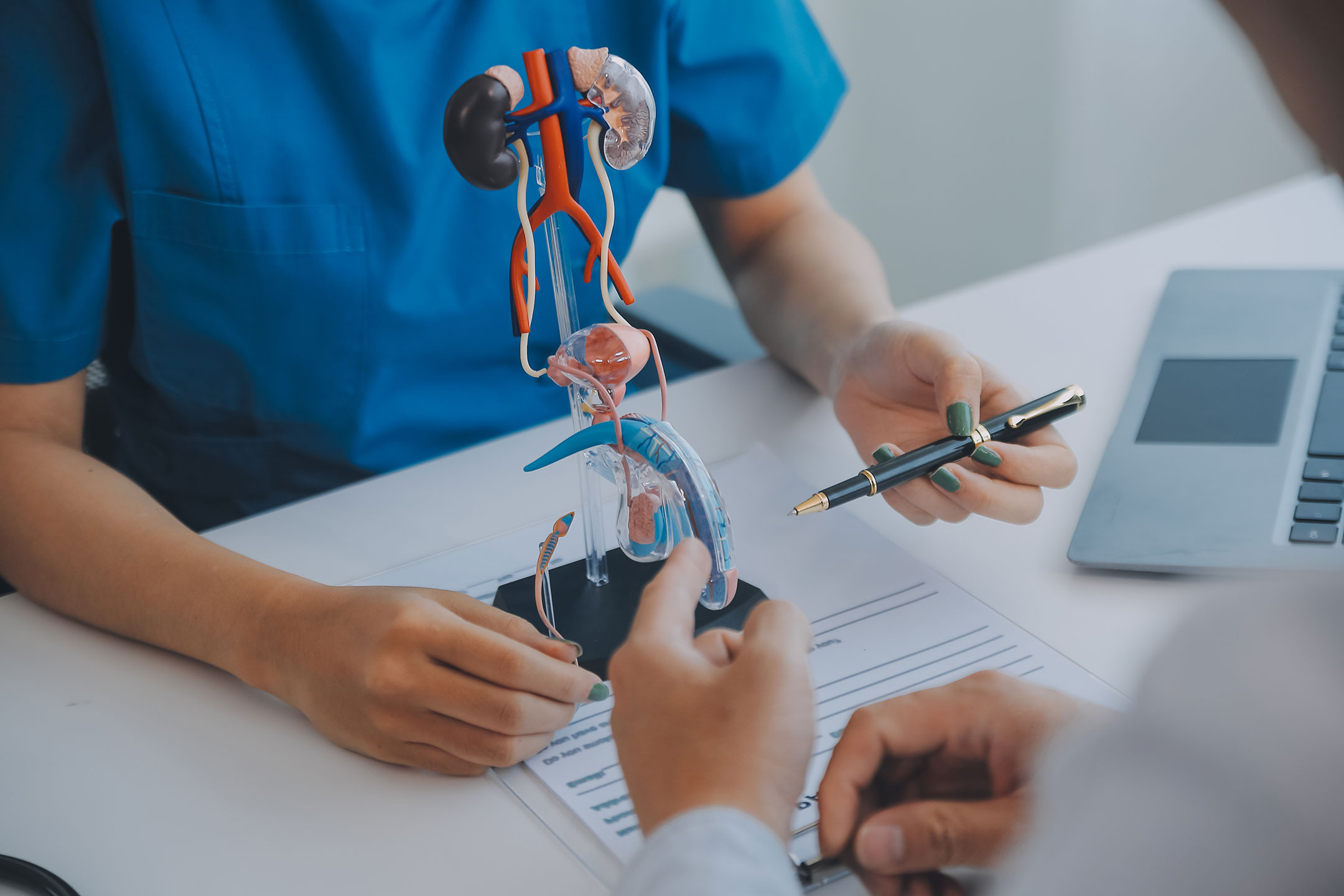
The prostate is a small gland below the bladder. It surrounds the urethra, which is the tube that carries urine out of the body.
The prostate commonly grows with age. This is known as benign prostatic hyperplasia. As it enlarges, it can narrow the urethra and affect the flow of urine. It may also cause the bladder to work harder to empty.
Not everyone with BPH has symptoms. For some people, changes are mild. For others, symptoms can disturb sleep, affect work or travel and make it difficult to feel comfortable away from home.
Is an enlarged prostate the same as prostate cancer?
No. BPH is not prostate cancer and does not turn into prostate cancer.
However, prostate enlargement and prostate cancer can occur at the same time, and some urinary symptoms can overlap. Symptoms alone cannot confirm the cause, so ongoing urinary changes should be assessed rather than assumed to be BPH.
A PSA blood test may be discussed as part of an assessment. PSA can be raised for several reasons, including benign enlargement, inflammation, infection and prostate cancer. A result needs to be considered alongside your symptoms, medical history and any other investigations.
Find more information about benign enlarged prostate.
Common enlarged prostate symptoms
Enlarged prostate symptoms usually relate to storing urine in the bladder or passing urine.
They can include:
- A weak or slow urine stream
- Difficulty starting to pass urine
- Needing to strain before urine starts to flow
- Stopping and starting while passing urine
- Dribbling after finishing
- Feeling that the bladder has not emptied fully
- Passing urine more frequently during the day
- A sudden urge to pass urine
- Waking at night to pass urine – known as nocturia
- Returning to the toilet shortly after passing urine
Symptoms do not always match the size of the prostate. A smaller prostate can sometimes cause significant urinary symptoms, while a larger prostate may cause few changes.
What are the first signs of an enlarged prostate?
Early signs are often gradual. You may notice that it takes longer to start passing urine, your flow is weaker or you are getting up more often during the night.
These symptoms are not always urgent, but they should be discussed with a healthcare professional if they continue, worsen or begin to affect daily life.
What causes the prostate to enlarge with age?
The exact cause of prostate enlargement is not fully understood. It is closely linked with ageing and changes in hormone activity over time.
As the prostate grows, it may place pressure on the urethra. The bladder may then need to work harder to empty, which can contribute to frequency, urgency and incomplete emptying.
Factors that may be associated with BPH include:
- Increasing age
- A family history of prostate enlargement
- Being overweight
- Low physical activity levels
- Health conditions such as diabetes and heart disease
Having these factors does not mean you will necessarily develop troublesome symptoms. Equally, BPH can affect people without obvious risk factors.
Is an enlarged prostate dangerous?
An enlarged prostate is often manageable, especially when symptoms are mild. However, it can sometimes lead to complications if the bladder cannot empty properly.
Possible complications include urinary retention, recurrent urine infections, bladder stones and changes to bladder function.
Seek urgent medical advice if you:
- Cannot pass urine
- Have severe lower abdominal pain or swelling
- Have a fever or feel very unwell with urinary symptoms
- Notice visible blood in your urine
- Develop severe pain in your side or back with urinary symptoms
If you cannot pass urine and are in significant pain, attend A&E. Call 999 in an emergency. For urgent advice that is not an emergency, contact NHS 111.
Blood in the urine can have several causes and does not necessarily mean cancer, but it should always be checked.
How is an enlarged prostate diagnosed?
BPH is assessed using the overall picture of your symptoms, health and test results.
An appointment may include questions about your urine flow, frequency, night-time waking, urgency and how symptoms affect everyday life. A symptom questionnaire may also be used to understand severity and track changes over time.
Further investigations may include:
- A urine test
- Blood tests, including PSA where appropriate
- A urine flow test
- An ultrasound scan to assess the bladder and prostate
- A check of how much urine remains in the bladder after passing urine
- A prostate examination where clinically appropriate
The tests recommended will depend on your individual symptoms and assessment findings. NICE guidance recommends specialist assessment that can include examination, urinary flow testing and post-void residual measurement where appropriate.
Treatment options for an enlarged prostate
Not everyone with BPH needs active treatment straight away. Options depend on the severity of symptoms, test results, prostate size and shape, bladder function, general health and personal preferences.
Monitoring and lifestyle changes
When symptoms are mild, monitoring may be appropriate. This is sometimes called watchful waiting.
Practical changes may help some people. These can include reducing alcohol or caffeine if they worsen urgency or frequency and avoiding large drinks close to bedtime. It remains important to drink enough fluid, so avoid major changes to fluid intake without advice.
Medication
Medication may be considered when symptoms are more troublesome. Some medicines can relax the prostate area, while others may reduce prostate size over time.
Medicines are not suitable for everyone and can have side effects or interactions. A clinician can discuss whether they may be an appropriate option after assessment.
Minimally invasive procedures
If symptoms remain troublesome, or medication is not suitable or has not helped enough, a less invasive procedure may be considered.
- Urolift treatment uses small implants to hold prostate tissue away from the urethra.
- Rezum treatment uses water vapour to treat prostate tissue contributing to blockage.
- iTind treatment uses a temporary device intended to reshape the prostate channel in selected cases.
- Prostate artery embolisation is an image-guided procedure that reduces blood supply to parts of the prostate.
These options have different potential benefits, risks and limitations. Not every procedure is suitable for every prostate shape, size or symptom pattern.
Surgical treatment
Surgery may be discussed when symptoms are severe, complications have developed or another approach is unlikely to be suitable.
- HoLEP treatment uses a laser to remove obstructing prostate tissue.
- TURP treatment is an established operation that removes prostate tissue through the urethra.
Potential risks include bleeding, infection, temporary urinary symptoms and changes to ejaculation or sexual function. The benefits, risks, alternatives and follow-up should be discussed carefully before any treatment is agreed.
Do I always need surgery for BPH?
No. Many people with an enlarged prostate do not need surgery.
Some people may only need monitoring and practical advice. Others may consider medication or a less invasive procedure. Surgery may be appropriate for selected patients whose symptoms are severe or whose tests show a reason for more active treatment.
There is no single best BPH treatment. The most appropriate option depends on your symptoms, investigations, medical history and what matters most to you.
When should I see a urologist about prostate symptoms?
Consider seeking assessment if urinary symptoms are persistent, getting worse or affecting sleep, work, travel or confidence.
Prompt medical advice is particularly important if you have repeated urine infections, visible blood in your urine, pain, unexplained weight loss or increasing difficulty passing urine.
Tyneside Urology Partners provides private urology care in Team Valley for patients across Newcastle, Gateshead and the North East. A confidential consultation can help you understand the possible causes of prostate symptoms and the treatment options that may be suitable.
Enlarged prostate FAQs
- Can an enlarged prostate cause erectile dysfunction?
Not necessarily. BPH and erectile dysfunction can both become more common with age. Some treatments for urinary symptoms may also affect sexual function or ejaculation, so it is important to raise any concerns during an assessment.
- Does a weak urine stream always mean an enlarged prostate?
No. A weak stream can have several causes, including BPH, a narrowing of the urethra or bladder muscle problems. Assessment can help identify the likely cause.
- Can BPH improve without treatment?
Symptoms can remain stable or vary over time. If symptoms are mild, monitoring may be appropriate. If they are worsening or affecting daily life, assessment can help determine whether treatment may be helpful.
- Does an enlarged prostate increase PSA?
It can. PSA may be raised by benign enlargement, inflammation, infection and other prostate conditions. A raised PSA does not confirm prostate cancer but may need further assessment.
- Which BPH treatment is best?
There is no single best treatment for everyone. Suitable options depend on your symptoms, test results, prostate characteristics, general health and treatment priorities.
Book a consultation
To discuss your symptoms or treatment options, make an enquiry with Tyneside Urology Partners.