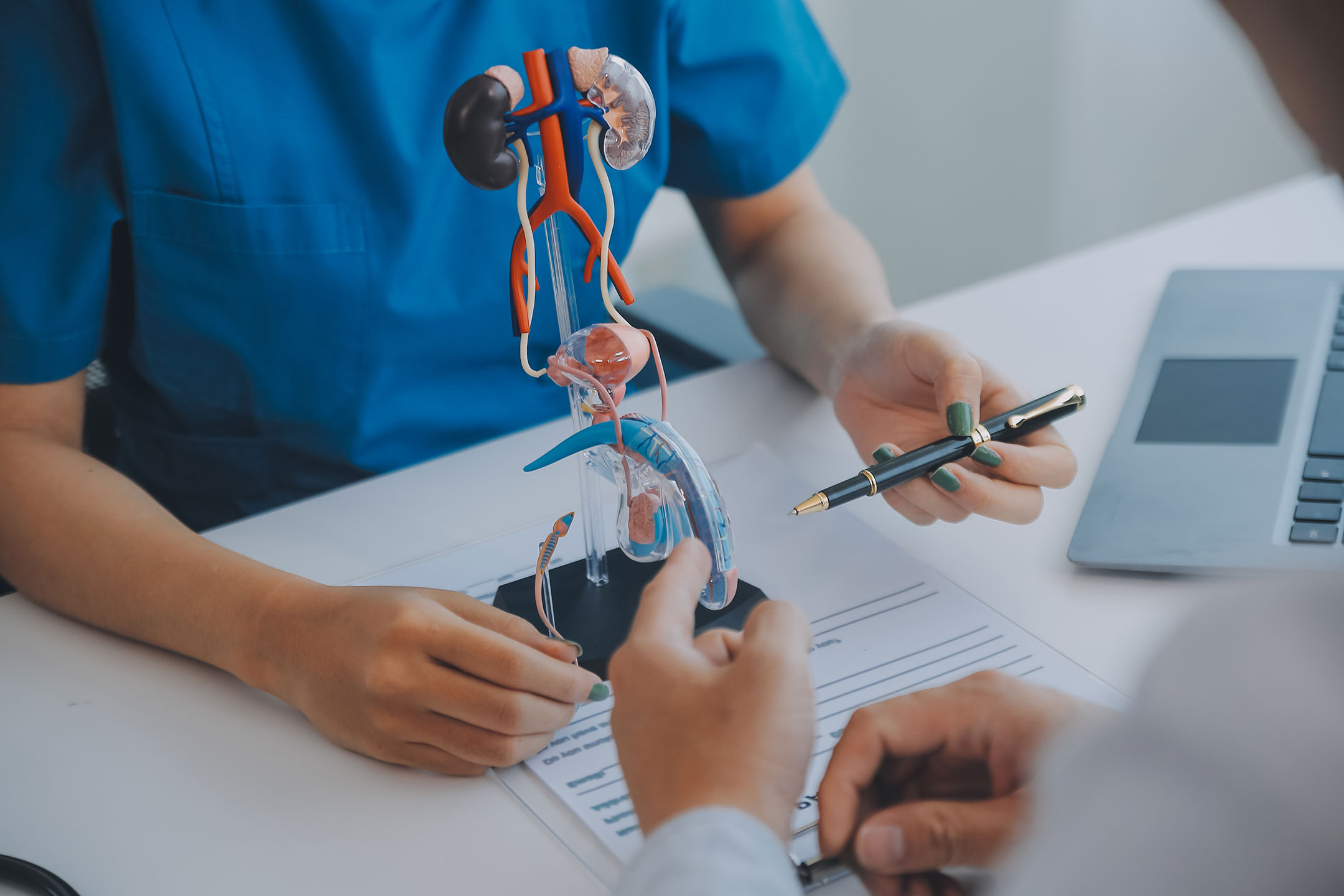
An enlarged prostate, also called benign prostate enlargement or BPH, can press on the tube that carries urine out of the bladder. This can lead to symptoms such as a weak flow, difficulty starting, stopping and starting, frequent urination, urgency or waking at night to pass urine.
UroLift is one treatment option for selected men with urinary symptoms caused by an enlarged prostate. It is designed to open the prostatic urethra without cutting away or removing prostate tissue. NICE describes UroLift as a minimally invasive procedure that may be considered as an alternative to TURP or HoLEP for lower urinary tract symptoms caused by benign prostatic hyperplasia.
What is UroLift and how does it work?
UroLift is a prostatic urethral lift procedure. During the procedure, small implants are placed to hold enlarged prostate tissue away from the urethra. This helps widen the channel through the prostate so urine can pass more easily.
Unlike some prostate operations, UroLift does not involve cutting, heating or removing prostate tissue. The manufacturer describes the procedure as using a delivery device passed through the urethra to place small permanent implants that lift and hold the prostate tissue out of the way.
UroLift may be discussed if your symptoms are affecting daily life and simpler options, such as lifestyle changes or medication, are not enough or are not suitable. It is not suitable for everyone. Suitability depends on factors such as:
- Your symptoms
- Prostate size and shape
- Whether there is a prominent middle lobe
- Bladder function
- Urine flow and emptying
- Other health conditions
- Your priorities around recovery and sexual side effects
A specialist assessment is needed before deciding whether UroLift is appropriate.
What symptoms can UroLift help with?
UroLift is used for urinary symptoms caused by benign prostate enlargement. These may include:
- A weak urine stream
- Difficulty starting to pass urine
- Stopping and starting during urination
- Feeling that the bladder has not emptied fully
- Needing to pass urine often
- Waking at night to pass urine
- Sudden urgency
These symptoms can have several causes, so assessment is important before treatment is planned.
What happens before UroLift?
Before UroLift, you would usually have a consultation to discuss your symptoms, medical history and treatment goals. Your clinician may ask about how often you pass urine, how strong your flow is and how much your symptoms affect sleep, work and daily life.
Tests may be recommended to help understand the cause of your symptoms. These can include urine testing, a prostate examination, urine flow testing, bladder scanning, PSA blood testing or a camera test called cystoscopy. The exact tests depend on your symptoms and clinical assessment.
You should also be given time to discuss:
- The expected benefits
- Possible risks and side effects
- Alternatives to UroLift
- Whether you may need a catheter
- What to expect during recovery
- Whether further treatment could be needed in future
What happens during UroLift?
UroLift is usually performed as a day-case or outpatient-style procedure, depending on the setting and patient factors. The procedure is carried out through the urethra, so there is usually no external cut. A small instrument is passed into the urethra to reach the prostate. Implants are then placed to pull the enlarged prostate tissue away from the urinary channel.
Is UroLift better than TURP?
UroLift is not simply “better” or “worse” than TURP. They are different treatments with different advantages, limitations and recovery profiles.
TURP, short for transurethral resection of the prostate, removes part of the prostate tissue to create more space for urine to flow. It has been used for many years and may offer greater improvement in urinary flow and symptoms for some patients. NICE’s evidence review found that TURP and HoLEP were associated with greater improvements in symptom score than UroLift at all measured time points.
UroLift may be preferred by some men because it is less invasive, usually has a shorter recovery period and has a lower risk of ejaculation problems than TURP. NHS England’s decision support tool lists UroLift as having a lower average risk of new ejaculation problems than TURP or HoLEP, based on research averages.
In practice, the right choice depends on what matters most to you. For example, one person may prioritise maximum symptom improvement, while another may prioritise quicker recovery or preserving ejaculation. Your clinician should discuss the options in the context of your prostate size, symptoms, test results and preferences.
Does UroLift affect ejaculation?
UroLift is often considered when preserving ejaculation is an important priority. Because UroLift lifts prostate tissue rather than removing it, the risk of ejaculation problems is generally lower than with treatments such as TURP or HoLEP.
NHS England’s decision support tool reports that, out of every 100 people, fewer than 1 had new ejaculation problems after UroLift in the studies it summarises. For TURP or bladder neck incision, the same tool reports a much higher average rate of new ejaculation problems.
This does not mean there is no risk. Sexual side effects, discomfort, bleeding, infection or the need for further treatment should be discussed before any procedure. You should tell your clinician if preserving ejaculation is important to you, as this may affect which treatments are most suitable.
How long is UroLift recovery?
Recovery varies from person to person. Many men recover more quickly after UroLift than after tissue-removing prostate surgery, but symptoms can temporarily feel worse before they improve.
NHS England’s decision support tool groups UroLift with procedures where recovery may take around 1-3 weeks, while TURP, HoLEP, GreenLight and Aquablation are shown in the longer 6-12 week recovery group. The same tool notes that flow and bladder emptying often improve within weeks, while other symptoms can take months to improve.
Common short-term symptoms after UroLift may include:
- Stinging or burning when passing urine
- Needing to pass urine more often
- Urgency
- Pelvic discomfort
- Some blood in the urine
- Temporary difficulty passing urine
The UroLift manufacturer states that common side effects are usually temporary and may include discomfort when urinating, urgency, pelvic pain and blood in the urine.
Your recovery instructions should be provided by your treating team. You may be advised to avoid heavy lifting, strenuous exercise or sexual activity for a short period, depending on your procedure and recovery.
What results can you expect after UroLift?
UroLift may improve urinary flow and reduce bothersome symptoms, but results vary. It may not improve symptoms as much as some larger prostate operations, and some people may need further treatment later.
According to NHS England, on average, 70-90 out of every 100 people had improved symptoms after UroLift and 10-15 out of every 100 needed another surgery within 5 years. These are averages from research studies and may not predict an individual outcome.
It is important to have realistic expectations. UroLift may be a good option for selected men, particularly where quicker recovery and lower risk of ejaculation problems are important, but it is not the most suitable treatment for every prostate size or symptom pattern.
How much does UroLift cost privately?
Private UroLift costs vary between clinics. The total cost may depend on:
- Consultation fees
- Pre-treatment tests
- Anaesthetic arrangements
- Hospital or theatre fees
- The number of implants used
- Follow-up appointments
- Whether any additional tests or treatment are needed
Tyneside Urology Partners’ private UroLift treatment depends on your assessment, the procedure required and the treatment pathway recommended. Tyneside Urology Partners can provide clear information about fees before treatment is arranged.
What are the risks and side effects of UroLift?
All procedures carry risks. With UroLift, possible side effects may include:
- Burning or stinging when passing urine
- Blood in the urine
- Pelvic discomfort
- Urinary urgency
- Temporary difficulty passing urine
- Urinary tract infection
- Bleeding
- Need for a catheter in some cases
- Symptoms not improving enough
- Need for further treatment in future
The manufacturer notes that rare side effects, including bleeding and infection, may require further intervention.
Your clinician should explain your individual risks before treatment, including how UroLift compares with alternatives.
What are the alternatives to UroLift?
Alternatives depend on your symptoms, prostate anatomy, general health and preferences. Options may include:
- Lifestyle changes
- Medication
- Rezum water vapour therapy
- iTind
- TURP
- HoLEP
- Aquablation
- Prostate artery embolisation
- Bladder neck incision in selected cases
- Monitoring, if symptoms are mild
You should seek medical advice if urinary symptoms are affecting your sleep, comfort or daily life.
You should seek urgent medical advice if you:
- Cannot pass urine
- Have severe lower abdominal pain
- Have a fever, shivering or feel very unwell with urinary symptoms
- See visible blood in your urine
- Have new or worsening symptoms that concern you
An enlarged prostate is common, but urinary symptoms should be assessed so the cause can be understood and the most suitable next step can be discussed.
Private UroLift treatment in Newcastle
Tyneside Urology Partners provides private urology care for patients across Newcastle, Tyneside, Gateshead, Team Valley, Tyne & Wear and the North East.
If you are considering UroLift for enlarged prostate symptoms, a private consultation can help you understand whether it may be suitable, what tests may be needed and how it compares with other treatment options.
FAQs
- Is UroLift suitable for everyone with an enlarged prostate?
No. UroLift may be suitable for some men with urinary symptoms caused by benign prostate enlargement, but it is not appropriate for everyone. Suitability depends on prostate size and shape, symptom severity, bladder function, test results and personal priorities.
- Is UroLift better than medication?
UroLift and medication work in different ways. Medication may help some men manage symptoms without a procedure. UroLift may be considered when symptoms remain troublesome, medication causes side effects or a person wants to discuss procedural options. A specialist assessment can help compare the options.
- Will I need a catheter after UroLift?
Some men do not need a catheter after UroLift, but some may need one temporarily. This depends on bladder emptying, swelling, symptoms and the clinician’s judgement. Your treating team should explain this before the procedure.
- Does UroLift stop me having TURP later?
UroLift does not necessarily prevent future prostate treatment. The UroLift manufacturer states that the procedure does not prevent future UroLift, TURP or laser procedures if recommended by a doctor.
- How quickly will I notice results?
Some symptoms may improve within weeks, especially flow and bladder emptying, but other symptoms can take longer. NHS England’s decision tool notes that symptoms can temporarily worsen before they improve and that some urinary symptoms may take months to settle.
Make an enquiry
To find out whether UroLift may be suitable for your enlarged prostate symptoms, make an enquiry with Tyneside Urology Partners.